Your weekly glimpse into research in action at Southern Dairy Hub.
Insights
Parentage testing results: We received our results last week from LIC for our 2025 born animals, and they have identified one animal affected by a production variant. This variant, detected through DNA testing, can negatively impact production. Although the incidence is low (around 0.5% of animals born), the estimated loss in milk production can be between 37 and 75 kgMS per lactation. That’s a significant drop, and this animal won’t be going to grazing. We also reviewed our DNA results to remove any half-recorded animals or animals verified to beef sires. We identified four animals from the 207 samples. This helps ensure we’re bringing the “right” animals into the herds.
Weighing of 2025 born animals: These animals were weighed and drenched again this week, and all calves are now fully weaned from milk. The mob averaged 110kg, with a range of 91kg to 138kg. Seventeen animals were identified through MINDA Weights as needing preferential attention. They’ll move into the monitor mob with a focus on lifting weight gain before being sent to the grazier.
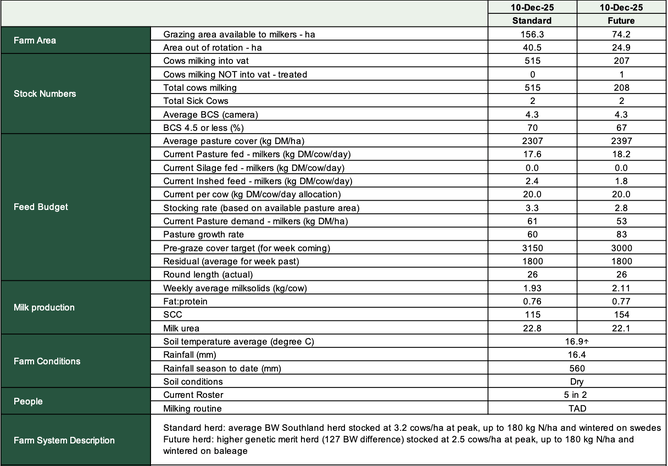
Pasture quality: This week we took paddocks out of the Future herd for baleage, but not for the Standard herd as their pasture wedge is on target for this time of year. Growth is broadly in line with demand for the Standard herd (3.2 stocking rate), but in the Future herd growth is well ahead of demand (growth 83, demand 53 for a 2.5 per cow stocking rate). We’re continuing to feed Future cows in-shed (around 1kg on average, with about 100 cows on priority feed receiving more). We’ll continue this until the end of December to ensure they receive their Vitalise mineral mix through calving and mating. After that, we plan to remove in-shed feed for the Future herd unless demand deficit requires it. Managing pasture quality in a lower stocking rate herd at this time of year is always a challenge.
Mating: Our phantom scan is booked for the end of December. We’ve put together a list of cows that haven’t returned to heat within the first three weeks of mating. There are 480 animals on this list. The scan will help identify a small percentage of cows we believe to be pregnant but may not be, giving us a window to work with our vets on a plan to get them in calf before mating ends. We look forward to sharing the results.
Standard herd
Average BW Southland herd stocked at 3.2 cows/ha at peak, up to 180 kg N/ha and wintered on swedes.
Future herd
Higher genetic merit herd (127 BW difference) stocked at 2.5 cows/ha at peak, up to 180 kg N/ha and wintered on baleage.
If you have any questions about this week's HubWatch, please contact our team.