As the year draws to a close, the Southern Dairy Hub team want to thank everyone who has been part of another productive and engaging year on farm. Your support, questions and interest in our work play an important role in how we contribute to Southland's dairy sector with vital research.
The Hub continues to be a vital resource for trialling ideas that could shape the future of dairy farming. Whether it’s through our Future Farm Systems Demonstration Project, exploring environmental practices, or supporting farmers with practical, real-world data, the work we do at the Hub impacts everyone in the region. If you haven't visited us yet, please come and see us in the new year. Our field days are a great way to see the research and demonstration in action, and to connect with other farmers.
As you already know, after nearly three years in my role as General Manager, I will be stepping down at the end of April 2026. I’m extremely proud of what we’ve achieved together, and I’m very appreciative of our committed and hardworking team; thank you all for being so awesome. Working with DairyNZ, SDDT and Bioeconomy Science Institute (previously AgResearch) has been a privilege, but it’s the southern farmers who make this job even more special.
Wishing you all a Merry Christmas, a relaxing break, and a great start to 2026.
Andrea Dixon, SDH General Manager
On the Ground at the Hub
It’s been a busy couple of months on-farm, with plenty happening across mating, pasture management, cropping and young stock as we head into summer. Here’s a snapshot of what’s been going on at the Hub.
Mating performance
Mating has been a major focus, with strong early results. The Future herd submitted at 92% in the first three weeks, well ahead of last season, while the Standard herd reached 89%. Younger cows in the Standard herd have been slower to submit, so they’ve been mobbed separately and are receiving priority feed. A phantom scan is booked for the end of December, with 480 cows identified for checking after not returning to heat. This will help pick up any cows not in calf early enough to intervene.
Body condition and feeding strategy
Body condition is steady at 4.4 across both herds. DelPro and the BCS camera continue to guide priority feeding, with pasture quality a key focus for the Future herd.
Both herds are still receiving in-shed feed to deliver their Vitalise minerals through mating. The plan is to remove this for the Future herd at the end of December unless feed deficits appear.
Pasture growth and silage reserves
Growth rates have varied from 36 to 83 kg DM/ha, often exceeding demand through November. This allowed regular baleage cuts and helped build a strong winter reserve.
Conditions are now drying out, but with around 130 tonnes of silage already on hand and more cuts planned early in the new year, we’re well placed heading into summer.
Cropping and winter planning
Cropping has progressed well, with kale and several grass paddocks sown and the remaining grass and swedes now planted.
The winter plan is locked in. The Standard herd will be wintered on kale and swedes over 70 days, and the Future herd will again be on grass and baleage. Supercruise Italian ryegrass continues to perform well, producing quality baleage and supporting strong body condition.
Young stock and DNA insights
Weaning is complete. Recent weighing showed the mob averaging 110kg, and 17 lighter calves have shifted into the monitor group for extra attention before heading to grazing.
DNA parentage testing identified one calf with a production variant, so it won’t be grazed. Four more animals were removed due to incomplete recording or beef sire verification, helping ensure the right replacements enter the herds.
Around the farm
Four dairy beef calves were sent to Lorneville in support of Hospice Southland, a great way to back a local organisation. A couple of weeks ago, we also held our end-of-year function in the cow shed with staff, families, the board and partners; a fitting way to wrap up a big year for the SDH whānau.
Festive Fun at the Hub
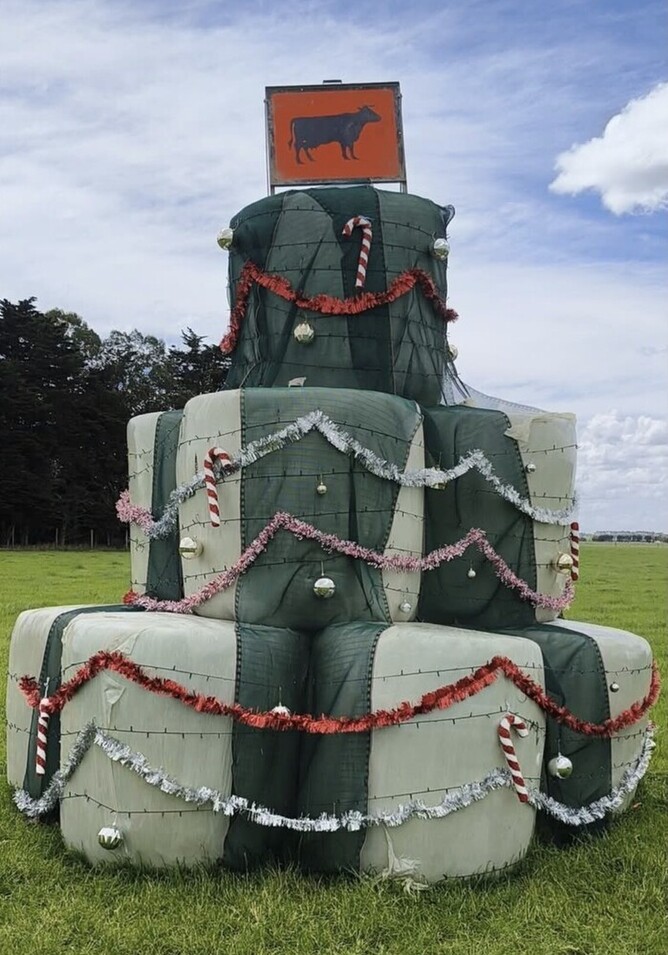
The Southern Dairy Hub team got into the Christmas spirit again this year by taking part in Thriving Southland’s annual Southland Christmas Competition.
The competition, which is open to catchment groups, businesses, farms and individuals across the region, is all about creativity and having a bit of fun. From decorated sheds and painted bales to pallet displays and tyre stacks, entries showcase the lighter side of life in rural Southland.
At the Hub, the team put together a festive display titled ‘Christmas Monstrosity’. A big shout-out goes to Sarah and Kaylah for the core design, with the wider team pitching in to bring it to life. It was a great excuse for everyone to enjoy some creativity together.
Competitions like this are a reminder that while the work on farm is serious, there’s always room for connection, humour and community spirit. SDH was proud to be part of an initiative that brings Southland catchment groups and rural communities together. Thanks to Thriving Southland for organising the competition again this year and for encouraging everyone to get involved. We loved being part of it.

Farmers Gather for SDH Farm Tour
A fantastic turnout of local farmers joined the Southern Dairy Hub team on Wednesday 8 October for a farm tour and discussion event at the SDH Cow Shed.
Guest speakers Dr Charlotte Westwood from PGG Wrightson Seeds and Leo Pekar from FarmWise led sessions focused on managing second-round pasture and understanding milk urea results. Dr Westwood covered how to test pasture quality, what milk urea can tell us at this time of year, and strategies for maintaining high-quality pasture. Leo Pekar shared insights on balancing pasture intake before mating, key trigger points to watch, and how to use the feed wedge to support farm decision-making.
Farmers engaged in lively discussions, sharing experiences and asking questions, with plenty of practical tips for applying back on their own farms. The event also included a wander around the Hub and a free lunch, giving attendees the chance to network and reflect on what they’d learned.
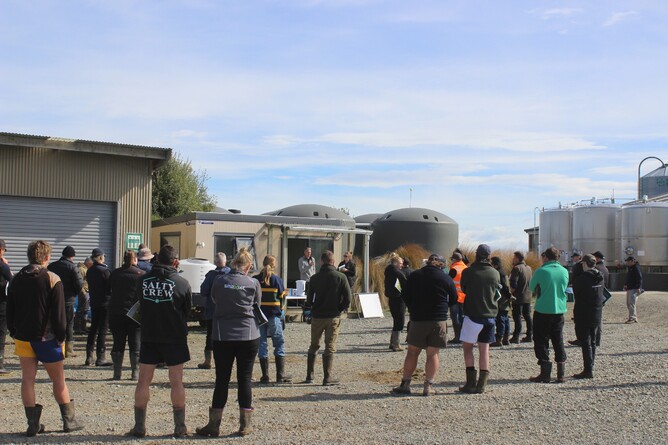
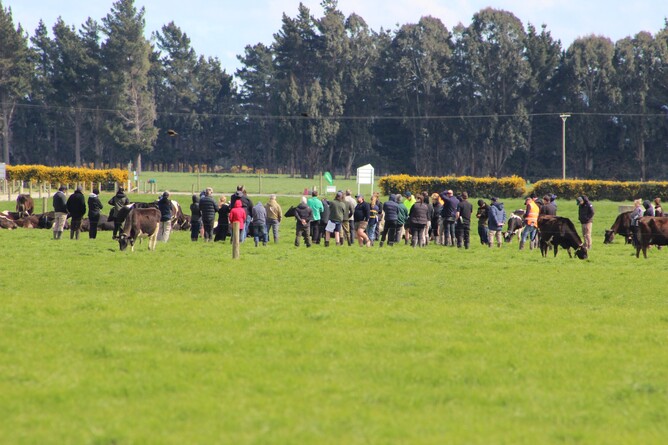
A big thank you to our speakers and everyone who attended; your questions and enthusiasm made the event a great success.
Broadcasting Plantain Seed via Drone
On 5 November, the SDH team trialled drone technology to broadcast plantain seed on farm, with Nick from Southland Drone Services and Sam from Agricom leading the operation.
We spread prill-coated Ecotain plantain seed at a rate of 8kg per hectare across seven recently grazed paddocks. As a Plantain Partner farm, our aim is to increase the percentage of plantain in our pastures. While plantain is establishing well in our new grass paddocks, this trial explores ways to boost plantain in paddocks where it is currently absent or has declined over the past few years.
Using the drone offers precise seed placement while avoiding compaction or damage that can occur when driving machinery into paddocks.
Sam from Agricom also assessed each paddock to enable ongoing monitoring of establishment, and one paddock is part of a broadcasting trial testing variable seeding rates.
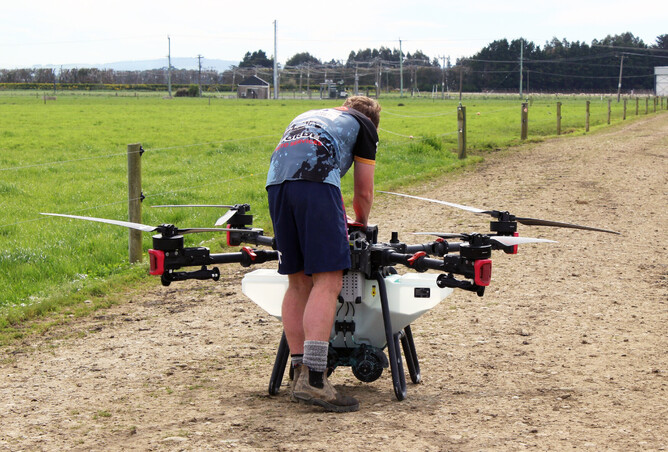
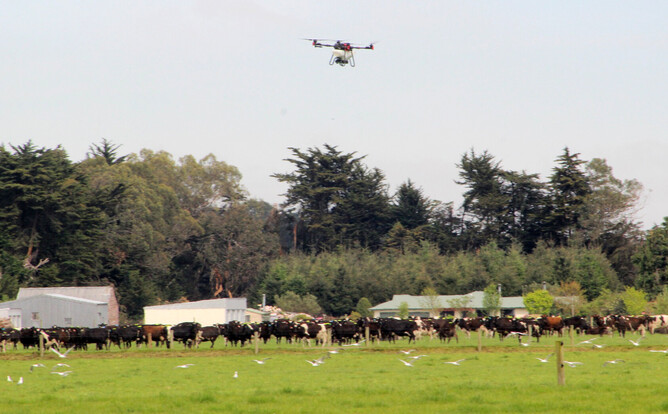

Big thanks to Sam (Agricom), Megan (PGG Wrightson), and Nick (Southland Drone Services) for supporting this trial. For more information on plantain, visit DairyNZ Plantain Overview.
Ministerial Visit
At the end of November, Agriculture Minister Todd McClay and Minister for the Environment Penny Simmonds visited the Southern Dairy Hub to see first-hand the scale and impact of the work taking place on farm. The visit provided an opportunity to showcase the facility, outline the purpose of the Hub and walk through a selection of the 32 research projects completed to date. The focus was on practical, future-focused solutions that support Southern farmers and contribute to wider national conversations.

The Ministers spent time with the SDH team and local farmers who help drive the success of the Hub. Their interest in the research programme and the way it connects science with everyday farm decisions was clear. Penny Simmonds later noted her appreciation on social media, recognising the quality of the projects and the value they bring to the dairy sector.
Support from the Southern Dairy Development Trust and the farmers who attended played an important part in the visit. It was a useful chance to highlight both the progress made so far and the ongoing commitment to research that is relevant for real farm systems.

How important is area allocation and feed allocation frequency in baleage wintering systems?
By Dawn Dalley, DairyNZ
Recent research investigated whether wintering on baleage improves cow lying times compared with wintering on fodder beet, and how area allocation/bale density (m2/cow/day or bales/ha) and frequency of baleage allocation (daily or every 4th day) impacted cow behaviour. Baleage was offered at 12 kg DM/day in ring feeders, with approximately 18 cows per feeder. Pasture area allocation was 6.7, 7.5 and 8.6 m2/cow/day which equated to 18, 16 and 14 T DM/ha or 82, 73 and 62 bales/ha, respectively. All allocations were significantly higher than the 10 T DM/ha Environment Southland threshold. The study ran from mid-June to mid-July, providing 30 days of data.
Average lying times ranged from 9.3 to 10.3 h/day (Figure 1). The greatest variation between cows was observed at the smallest area allocation, while the least variation occurred with the 3-day break. A surprising result was the longer average lying time with the daily break compared with the 3-day break, as the farm team felt the 3-day break animals were more settled. This farmer observation was somewhat supported by the average step data, with the 3-day animals doing 100 less steps per day, on average, than those offered baleage daily, and had the lowest average motion index of all the treatment groups. While the 3-day break cows weren’t lying as much, they weren’t wandering around the paddock either.
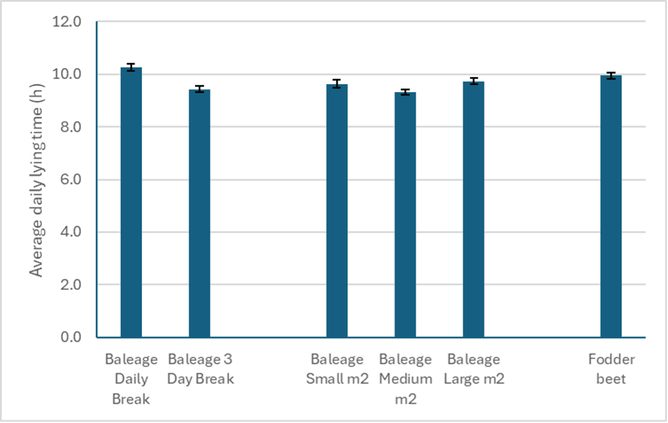
Figure 1: Average daily lying time for cows wintered on baleage at 3 bale densities, or offered baleage daily or every 4th day, compared with cows wintered on fodder beet
There was a very distinct lying pattern for all the treatment groups (Figure 2A & B). The lowest average lying times were observed from 9-11am and 4-6pm, with cows more likely to lie down from 8pm onwards. Some cows also chose to lie between 1pm and 3pm, especially when offered a larger area (Figure 2A). Cows offered 3-day breaks were inclined to lie for less time between 9pm and 5am (Figure 2B). For most treatments, fresh feed was only offered once per day; however, the cows still appeared to have two distinct feeding bouts.
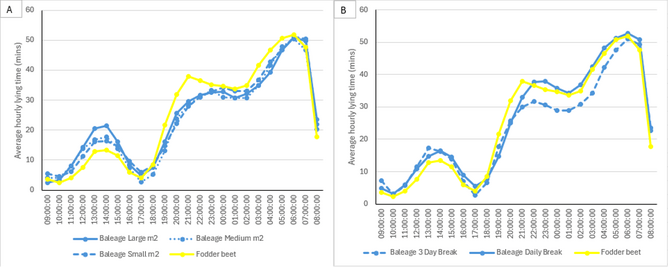
Figure 2: Average hourly lying time for cows wintered on baleage at 3 bale densities (A) or offered baleage daily or every 4th day (B), compared with cows wintered on fodder beet (A&B).
Interpreting transition data (i.e. cows either standing up or lying down) is challenging, as more transitions may indicate a less comfortable lying surface (i.e. a negative response to conditions) OR less competition for lying space, so cows are comfortable lying for shorter periods as they know there will be somewhere for them to lie again if they stand up (i.e. a positive response to conditions). Despite similar average lying time for cows wintered on baleage at different area allocations, the total number of transitions increased with increasing area allocation (Figure 3). The treatment with the lowest number of transitions across the trial period was the smallest area allocation cows.

Figure 3: Average daily transitions (up & down) for cows wintered on baleage at 3 bale densities or offered baleage daily or every 4th day, compared with cows wintered on fodder beet
Key insights:
Baleage wintering did not increase average daily lying time compared to fodder beet wintering.
Offering baleage in 3-day breaks did change aspects of cow behaviour but did not increase overall lying time.
Increasing daily area allocation increased the number of lying bouts, especially between 1pm and 3pm daily, but did not increase average daily lying time.
Andrea Dixon to Step Down as SDH General Manager
After nearly three years in the role, our GM Andrea Dixon has announced she is stepping down at the end of April 2026 to focus on the next stage of her career, along with family and personal priorities. Her departure comes at a time when the Hub has firmly shifted into its demonstration focus, supported by a clear strategy and a programme that connects research with everyday farm decisions.
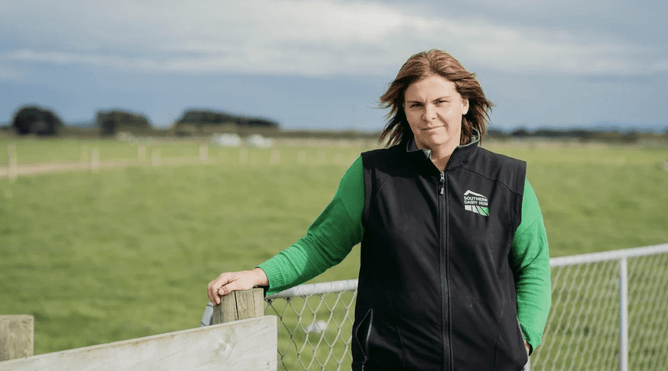
“I’m extremely proud of what we’ve achieved over the last, almost, three years. The Hub is an incredible farm, and our new demonstration focus means we can get meaningful insights to our farmers in real time. Working with DairyNZ, SDDT and Bioeconomy Science Institute (previously AgResearch) has been a privilege, but it’s the southern farmers who make this job special.”
– Andrea Dixon, SDH General Manager
“Andrea has been a wonderful General Manager, keeping the ship steady as we updated our Strategy and pivoted to a demonstration mode. We will miss Andrea’s passion, leadership and strategic thinking, and thank her for her contribution and wish her every success as she starts a new chapter in her life. We are indebted to her for her commitment and dedication for the Hub, and I cannot speak highly enough about Andrea’s capability and can-do attitude.”
– Simon Flood, SDH Board Chair
Recruitment for Andrea’s successor will begin in 2026. Andrea’s contribution has been significant, and her steady leadership has guided the Hub through an important phase of development. The team, partners and wider farming community wish her all the best as she moves into her next chapter.
Help shape the future of research in Southland
The Southern Dairy Development Trust (SDDT) is running three workshops across Southland in the week of 16 February, giving farmers the opportunity to directly influence what research takes place at the Southern Dairy Hub over the next five years and beyond.
Here's what we're asking:
90 minutes of your time
your honest thoughts on the farming challenges you'll face in 5-10 years
ideas on what research could actually help solve them
What you'll get:
direct input into research priorities
chance to network with progressive farmers facing similar challenges
morning tea and expert facilitation
the satisfaction of knowing future research will be shaped by what actually matters to you
This isn't about telling you what to do tomorrow. This is about solving the problems you'll face down the track - whether that's climate adaptation, labour efficiency, profitability under new regulations, or something else entirely.
Email admin@southerndairyhub.co.nz to register your interest now and we’ll send you details on the workshops in the new year.
Your insights matter. Let's make sure the research happening in your backyard actually helps your farm.
HubWatch
Want to know what’s really happening at the Southern Dairy Hub each week? HubWatch is your weekly glimpse into research and demonstration in action. Visit www.southerndairyhub.co.nz/hubwatch to find out the difference between the standard & future herds, and how our data can help your own decision-making on farm.
Sign up to get HubWatch straight to your inbox and keep an eye on our Facebook page for regular video updates from the farm.
It's a wrap
As we wrap up 2025, we’re grateful for all the collaborations, insights, and hard work that have made the past 12 months so productive. We look forward to another year of progress and continued support for the southern dairy community.
Thanks for reading. Stay tuned for updates in the new year or visit www.southerndairyhub.co.nz to find out more about our work.
Warm regards,
Andrea Dixon, SDH General Manager