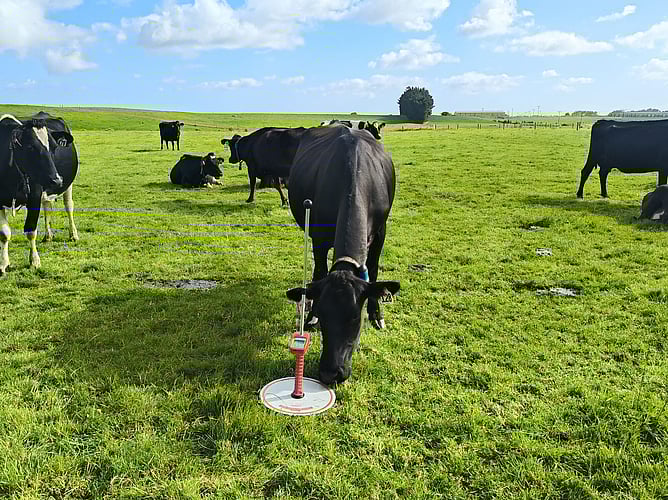
It’s been a busy few months at the Southern Dairy Hub, with plenty happening both on farm and across our research programmes.
In this edition you’ll find updates from the farm team on pasture management, feed planning, herd performance and crop monitoring, along with highlights from our recent farmer workshops and a visit from international researchers interested in the work happening here in the South.
It’s been particularly encouraging to see such strong engagement from farmers at our recent workshops. Ensuring the Hub’s research reflects the challenges and opportunities farmers are facing on the ground is central to what we do, and those discussions will help shape our priorities for the years ahead.
This newsletter also recognises the contribution of some of the people behind the Hub’s work. We acknowledge the retirement of long-time scientist Chris Smith after an extraordinary 50-year career supporting agricultural research, and we’re also highlighting some of the team members who help make the Hub’s research possible through our current video series.
As many of you will already know, after nearly three years as General Manager I’ll be stepping down from the role at the end of May. It has been a privilege to work alongside the Hub team and our partners at DairyNZ, the Southern Dairy Development Trust and the Bioeconomy Science Institute. Most of all, it’s been a privilege working with southern farmers whose engagement and support make the Hub’s work both relevant and worthwhile.
Thank you to everyone who continues to support the Southern Dairy Hub and the research happening here.
Andrea Dixon, SDH General Manager
On the Ground at the Hub
It’s been a busy couple of months on-farm, with plenty happening across pasture management, feed planning, herd performance and crop monitoring as we head into autumn. Here’s a snapshot of what’s been going on at the Hub.
Pasture and regrassing
A cultivation trial is underway in paddock 27 following winter baleage, comparing full cultivation with light disking. Early platemeter readings show higher pasture cover in the fully cultivated area, and the team will continue monitoring differences throughout the year.
New grass paddocks have established well and have now returned to the feed wedge, helping extend grazing rounds to 30 days for both the Future and Standard herds. Plantain establishment is also looking strong, with ongoing work to increase plantain content across the farm as part of the Plantain Partner programme.
Three paddocks on the lower terrace have also been taken out for autumn regrassing due to lower seasonal production and damage from the wet spring in 2024.
Crops and winter feed planning
Winter feed budgeting is underway using average historical crop yields to estimate requirements. While additional baleage has been made this season, a smaller volume will still need to be purchased.
The Hub has also secured an additional 120 tonnes of silage to support spring feed demand. Feed quality testing continues to guide feeding decisions.
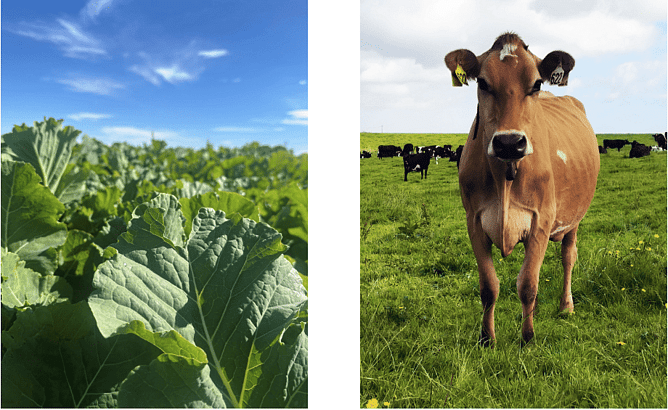
Crop establishment has generally been strong. Kale crops are approaching canopy closure and have received nitrogen applications via drone. Drone spreading has also been used to oversow kale seed where initial establishment gaps were identified.
Pasture and feed quality
Regular testing continues to inform feed management decisions. Recent pasture samples showed crude protein of 22% DM and metabolisable energy of 11.7 MJ/kg DM, although dry matter was lower than expected at 15%.
Silage testing has also been completed, allowing the team to refine feed-out calculations and better plan winter feeding strategies.
Milk production and reproduction
Milk production remains strong across both herds. The Future herd is producing 1.93 kg MS/cow/day and the Standard herd 1.84 kg MS/cow/day.
Season to date, the Future herd is tracking 5% ahead of last season, while the Standard herd is 13% ahead, with overall production sitting ahead of budget.
Pregnancy results have also been encouraging, with six-week in-calf rates of 77% for the Standard herd and 74% for the Future herd.
Feed management decisions
With strong pasture covers and good silage quality, in-shed feeding has now been removed for the Future herd. This aligns with the herd’s objective of prioritising homegrown feed wherever possible.
Winter crops
Winter crops are progressing well, with Firefly kale establishing strongly ahead of winter grazing.
Across the farm, ongoing monitoring, testing and careful feed management continue to support both herd performance and pasture resilience as the season moves towards autumn.
Strong turnout at SDH farmer workshops
Southern Dairy Hub recently hosted a series of three farmer workshops and an additional session for rural professionals that drew strong participation from across Southland and the wider dairy community. Held in Balclutha, Gore and Otautau, these sessions gave local farmers a meaningful chance to directly influence the future direction of research and demonstration work at the Hub.
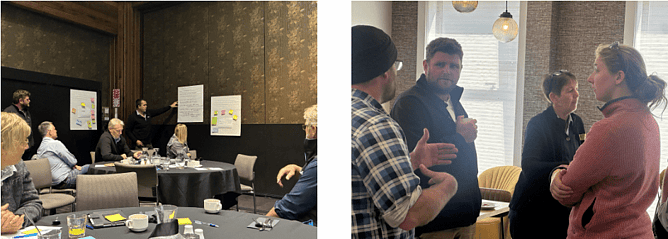
Farmers shared firsthand insights about the challenges they see ahead on their own farms, from pasture management and environmental outcomes to profitability under changing economic and regulatory conditions. The workshops were designed to create a space for practical conversation and collaborative priority-setting with the SDH and Southern Dairy Development Trust (SDDT) team.
Participants told us they appreciated the rare opportunity to shape the research priorities over the next five years and beyond, based on the challenges they’re currently facing.
Key themes that emerged included pasture quality, practical approaches to wintering and crop utilisation, grazing management under variable seasons, and water quality concerns.
These insights will now be collated and analysed by the Research Advisory Committee (RAC) and the SDDT team to inform the Hub’s research priorities and trial design in coming seasons. The intention is to ensure that the research undertaken at the Hub continues to be relevant, practical and grounded in farmer experience, while also delivering robust evidence that can benefit the broader dairy sector.
We’d like to thank all workshop attendees for their contribution. A big thank you as well to the farmers who took the time to speak with the Southern Dairy Development Trust team during the phone round, sharing their ideas even if they couldn’t make it to the workshops.
Feedback has been collected through workshops, field day interactions, phone calls and emails. If you weren’t able to attend but have ideas or priorities you’d like to share, we encourage you to get in touch – the Hub wants to hear from farmers and ensure your voice shapes work on the farm. Please send an email to andrea.dixon@southerndairyhub.co.nz to share your thoughts.
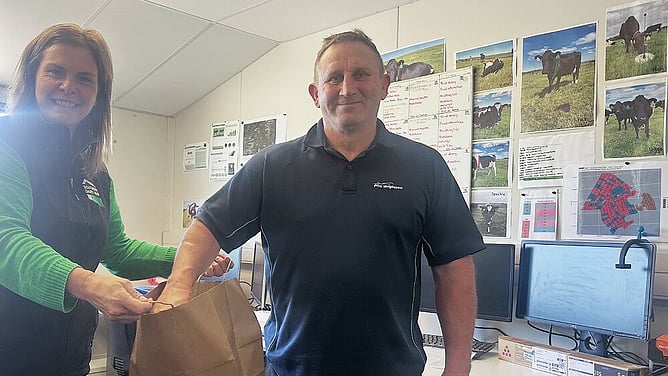
Congratulations to Sean Dowdle, winner of the $200 New World voucher for participating in the Field Days research question. Thanks to Roddy Bridson from PGG for drawing the winner.
For more about what comes next from these workshops, keep an eye on our website and Facebook page.
International visitors at the Hub
The Southern Dairy Hub recently hosted a delegation from Germany, reflecting the growing international interest in the work happening here in the South.
The group included researchers from the Thünen Institute of Farm Economics and a policy advisor from the Federal Ministry of Food and Agriculture. They visited to better understand the Hub’s research programmes and how we’re helping shape the future of dairying.
There was strong interest in the Hub’s greenhouse gas and methane mitigation research, and in how data gathered under real Southern farming conditions can inform practical solutions for farmers. Our visitors were impressed with the scale of the facility and its ability to deliver robust, credible research in a working farm environment.
Visits like this create valuable opportunities to exchange ideas, strengthen research links, and contribute to informed conversations about climate change and agricultural policy. They also help ensure Southern farming systems are part of wider global discussions.
The visit brought together collaborators from Thriving Southland and DairyNZ, reflecting the strong partnerships behind the Hub’s work.
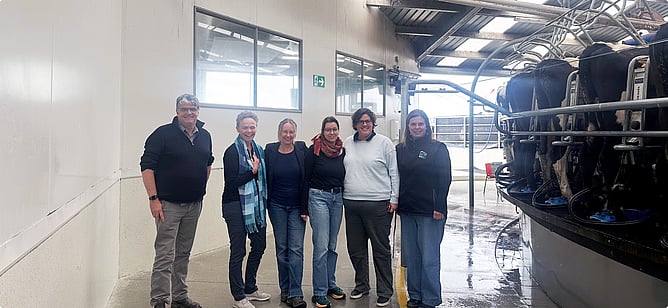
Photo: Richard Kyte (Project Lead - Thriving Southland), Cecile De Klein (Senior Scientist - Bioeconomy Science Institute), Dorothea, Anna, Birthe, Andrea Dixon (SDH GM) and Dawn Dalley (Senior Scientist - DairyNZ) via Teams.
Hub scientist and advocate retires after 50 years
Southland scientist Chris Smith, a driving force behind SDH and advocate for research to support Southern farmers, has retired.
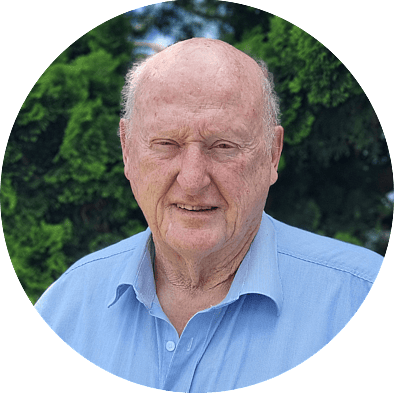
The Bioeconomy Science Institute scientist has devoted 50 years to advancing agricultural science – shaping farming practices and influencing industry decisions across New Zealand. His leadership and commitment have left an enduring legacy that will continue to benefit farmers and researchers for years to come.
Chris played a pivotal role in the soil and environmental research undertaken at the Hub, including its conversion to a dairy farm in 2017. He also led several key research projects, notably a three-year trial investigating nitrogen leaching in winter crops. The findings revealed that fodder beet leaches significantly less nitrogen than kale – critical insights for farmers striving to meet environmental standards.
“Chris has been an avid supporter and advocate of the hub. His deep commitment to science and the farming sector is evident in everything he does. He consistently sought out opportunities that aligned with the priorities of Southern farmers, ensuring our work delivered real impact. His research has provided invaluable insights that continue to help farmers in Southland, and across the country, improve productivity and sustainability.” – Andrea Dixon, SDH General Manager
“Chris has been instrumental in delivering the environmental research behind the first phase of farm systems work at SDH. His expertise has been invaluable to the DairyNZ team, particularly across all environmental aspects of the programme. As the key person on the ground, Chris has overseen the monitoring equipment, managed sample collection, and expertly collated and communicated results at field days and conferences. Having someone with Chris’s experience and commitment has been integral to ensuring southern farmers receive meaningful value from the DairyNZ levy investment in the region.” – Dawn Dalley, DairyNZ senior scientist
Chris’s influence extends far beyond the Hub. He championed one of New Zealand’s longest-running pasture growth monitoring projects at Woodlands Farm in Southland, creating a dataset that has delivered key insights into pasture growth and climate impacts. Over the decades, his research has spanned everything from grass grub mitigation to nutrient management and environmental sustainability.
The pasture growth monitoring at Woodlands Farm will continue under the leadership of Anna Taylor, a senior research associate based in Canterbury, ensuring Chris’s legacy lives on.
Thank you Chris for your outstanding contributions to SDH and the primary sector. We wish you all the best for your next chapter.
The people behind the research
When people think about the Southern Dairy Hub, they often think about trials, data and results. What is less visible is the team working behind the scenes to design, run and interpret that research at commercial scale. To bring those roles into clearer focus, we’re currently running a Facebook video series profiling some of the people whose work underpins the science and day to day operations.
In our first video, GM Andrea Dixon talks about what it takes to run a research farm at commercial scale and why the Hub’s work matters for southern farmers. Our follow-up video will feature Farm Manager Michael Berkers who will share what’s involved in managing the farm day to day and the value of robust, farm level data. DairyNZ senior scientist Dawn Dalley will also talk about how the Hub’s work helps identify key issues for southern farmers and turn research into useful insights.
And there’s more video content on the way. Dr Cecile de Klein will share insights from her greenhouse gas research, including practical options for lowering emissions through improved homegrown feed use, productivity gains, animal health and reduced nitrogen fertiliser inputs. Her work also highlights the connection between emissions reductions and lower nitrate leaching, reinforcing the link between climate and water quality outcomes.
In a separate video, soil scientist Ross Monaghan will explain how nitrogen and soil research at the Hub is tackling complex questions in a practical way. From the importance of strong cover crops after autumn forage grazing, to the lower leaching potential of fodder beet, his message is clear. The Hub provides a place to test ideas thoroughly, reducing risk for farmers.
Keep an eye on the Southern Dairy Hub Facebook page to watch the full series and learn more about the systems, science and people behind the research.
Mating review 2025
In 2025 we decided to be bold with our mating plan and only mated for four weeks with AB replacement semen. We mated 30% to beef in the Standard herd from the start of mating, mated our heifers, and prioritised selected beef sires over the non-replacement portion of the herd. Sire selection for beef focused on calving ease, growth performance, and market suitability to ensure calves are fit for purpose from birth.
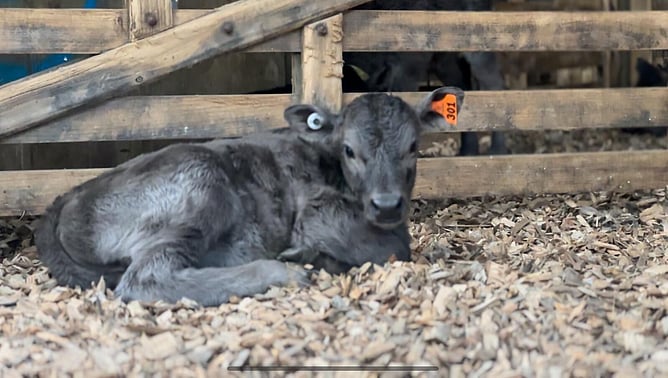
The plan
With the Future Herd being 127 BW above the Standard Herd, it was decided not to put any selection pressure on the herd in the first four weeks. We only used Premier Sires sexed semen and the Premier Sires Fwd Pack.
For the Standard herd, however, we mated the bottom 30% on BW to beef semen from the start of AB. We chose beef performance bulls focusing on calving ease, growth performance and market suitability to maximise the profit for the beef rearer.
Beef sires included
Remember it’s the beef sire, not the beef breed, that is most important when selecting your beef bull of choice.
Changus: We decided to use Kakahu Changus (a composite of Angus and Charolais) as this product ensures fast-growing animals without compromising quality for the rearer. We used 50 male sexed Changus straws, as the commercial market does pay a higher price for a male beef animal.
Our overall conception rate in our beef matings was 55%, and we were very happy with this result. This will give us just under 170 beef calves to sell to market, with a higher male portion ideally gaining a higher return. Click here for more information on Changus.
Hereford - Ardno Trust 2003: This bull has 2025-born calves due in the Beef + Lamb Dairy Beef Progeny Test. He is known for being in the top 11% for 600-day growth and top 4% for carcass weight.
Murray Grey: We used straws from our local breeder Torrisdale Stud. These straws were used in the Jersey and smaller-framed animals across both herds. We find the calves from Torrisdale Quercus and Swayze are a great dairy-cross beef option for these types of dairy cow beef matings.
The outcome
The farm achieved a great six-week in-calf result (6WICR), with the Futures achieving 74% 6WICR (LY was 72%) and the Standard herd achieving 77% 6WICR (LY was 75%).
We had strong conception rates across the products:
Premier Sires Fwd Pack semen – 60% conception rate
Premier Sires sexed semen – 56% conception rate
Beef semen (nominated) – 55% conception rate
Note: Southland’s average conception rate last season was 54.1%.

Interim statistics from LIC, March 2026
From the table below we expect approximately 242 AB replacement calves in spring 2026, while our target is 200 AB replacement calves – more than enough.
What is even more exciting is the considerable lift in BW from our 2025-born calves, with calves due in 2026 having an expected BW of 326 (= +53 BW from the 2025-born calves). That’s a massive gain given the average NZ herd shifts by around 23 BW per year.
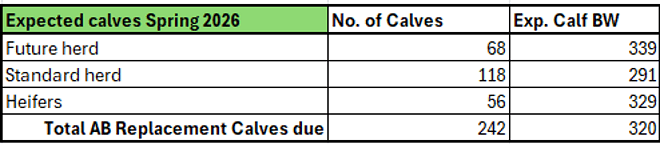
The beef calves available to the market post-calving will include a higher percentage of males due to the use of sexed semen. These dairy beef calves will be a high-value product for the beef rearer.

Summary
High 6WICR across both herds and strong conception rates have driven the success of our mating programme this season. This has been achieved through a strong focus on drying off on Body Condition Score (BCS) as the season closes out, managing BCS through winter by allocating mobs based on condition, and closely monitoring the BCS drop post-calving to ensure animals are on a rising plane at mating.
We are pleased with the number of high-quality AB replacement calves due this coming spring, as well as the quality dairy beef entering a value stream, contributing to a more sustainable future not only for our entity but also for the wider industry.
Key messages
The beef sire, not the beef breed, is most important for producing a high-quality dairy beef product
Higher conception rates are key to achieving good in-calf rates across the products
Sexed semen and heifer matings can quickly lift genetic indexes
Safety First
A great snapshot from the farm back in January. Wearing high-vis gear on site helps keep everyone safe and seen, especially during busy periods and around machinery. A good reminder that strong health and safety habits are part of everyday farm culture.
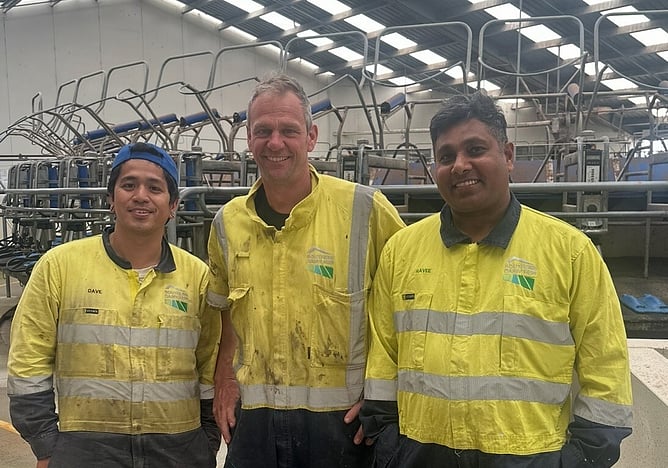
The photo, taken by GM Andrea Dixon, shows team members Dave Tulang, Michael Berkers and Ravee Gamage smiling in their overalls.
HubWatch
Want to know what’s really happening at the Southern Dairy Hub each week? HubWatch is your glimpse into research and demonstration in action.
Visit www.southerndairyhub.co.nz/hubwatch to find out the difference between the standard and future herds, and how our data can help your own decision-making on farm.
Sign up to get HubWatch straight to your inbox at and keep an eye on our Facebook page for regular video updates from the farm.
Thanks for reading. Stay tuned for updates or visit www.southerndairyhub.co.nz to find out more.
Warm regards,
Andrea Dixon, SDH General Manager