Your weekly glimpse into research in action at Southern Dairy Hub.
Insights
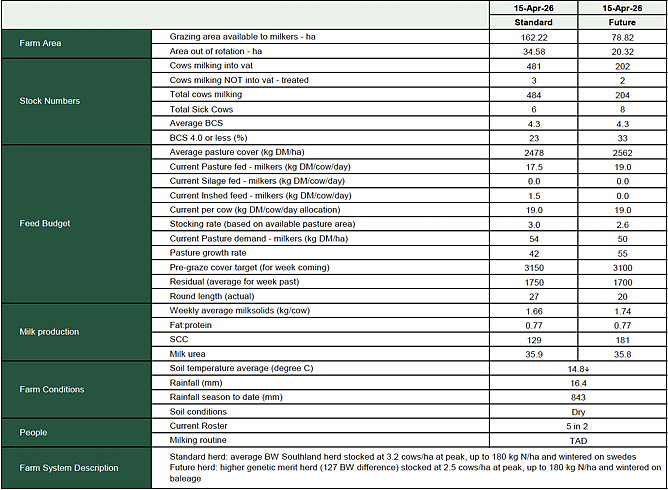
Production: The Future herd continues to produce 1.74kgMS per cow with NO imported feed (in-shed or silage), which is an excellent result for this time of the season. The Standard herd is producing 1.66kgMS per cow with 1.5kg of in-shed feed.
The rotation length has sped up for the Future herd because 11.6ha was cut for baleage as we work to manage average pasture covers leading into dry-off. Grass growth has been strong again this week, with 42 kgDM/day growth for the Standard herd and 55 kgDM/day for the Future herd.
Body Condition Score (BCS) training: Last week a team member participated in the BCS training course held on-farm by DairyNZ and Hamish Moore from Clutha Vets. They really enjoyed the course and gained a lot from it. We highly recommend this course to farmers and farm teams across the region. BCS dry-off decisions are critical at this time of year to ensure cows achieve pre-calving targets.
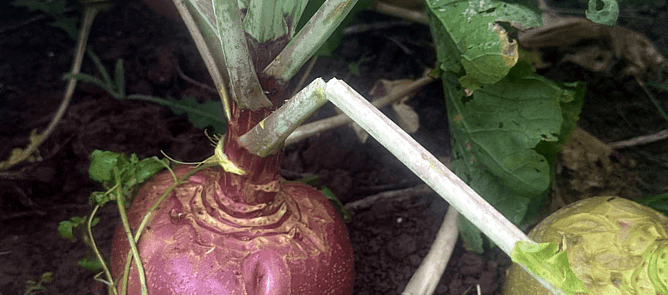
Crop pest control in brassica (aphids): This has been a challenge this year for SDH and, speaking with forage agronomist Mike Fairbairn from PGG, it appears to be affecting pockets of the wider region as well. One day they weren’t there, and the next they were.
We used a drone to apply the recommended insecticide. Even though temperatures are declining, aphids are resilient to cooler conditions, with lower temperatures only slowing population growth. Our recommendation would be to keep a close eye on brassica crops at this time of year.
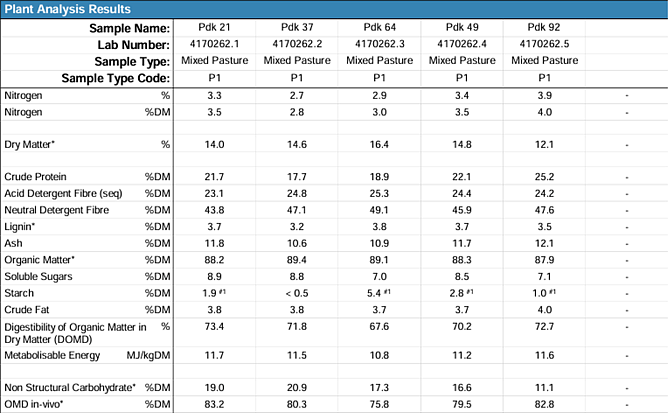
Pasture results: The results below show pasture quality remains strong for this time of the season (ME close to 12 and Crude Protein around 20).
The key point of interest is the lower DM% in paddocks. This reflects continued strong grass growth and the fact we have not yet had a frost. The ideal (usual) range for this time of year is 16–18% DM.
Soil temperatures: Soil temperatures have dropped again this week to 14.8°C. Temperatures and rainfall are similar to this time last year. We're currently well positioned for a good autumn, with strong pasture covers and favourable growing conditions.
As mentioned last week, the challenge now is managing this well so we enter spring with quality pasture and ideal covers. The baleage cut last week was a challenge to get baled given the rain and cooler conditions.
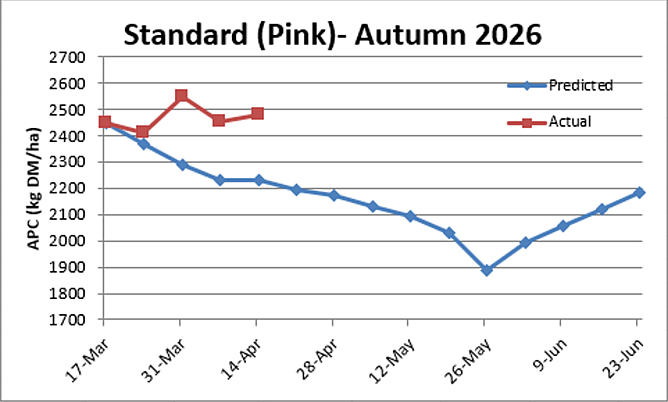
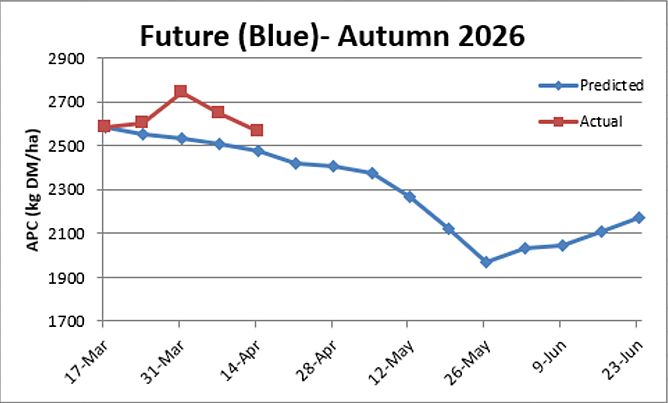
The graphs below show how we're tracking actual versus predicted for the autumn feed budget. Cutting the baleage paddocks last week has helped pull covers down for the Future herd. For the Standard herd, we'll be able to reduce supplements proposed in the budget to reach dry-off cover targets.
Standard herd
Average BW Southland herd stocked at 3.2 cows/ha at peak, up to 180 kg N/ha and wintered on swedes.
Future herd
Higher genetic merit herd (127 BW difference) stocked at 2.5 cows/ha at peak, up to 180 kg N/ha and wintered on baleage.
If you have any questions about this week's HubWatch, please contact our team.