Your weekly glimpse into research in action at Southern Dairy Hub.
Insights
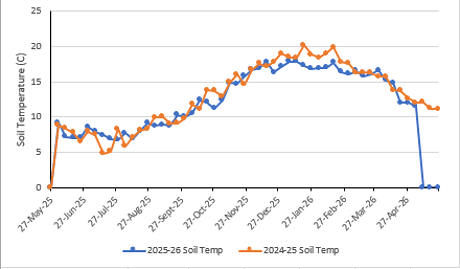
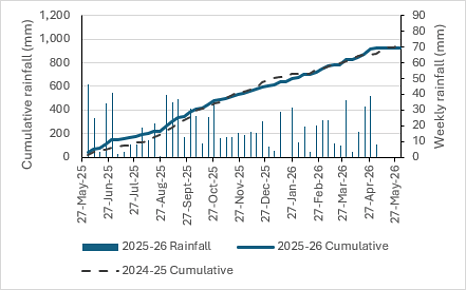
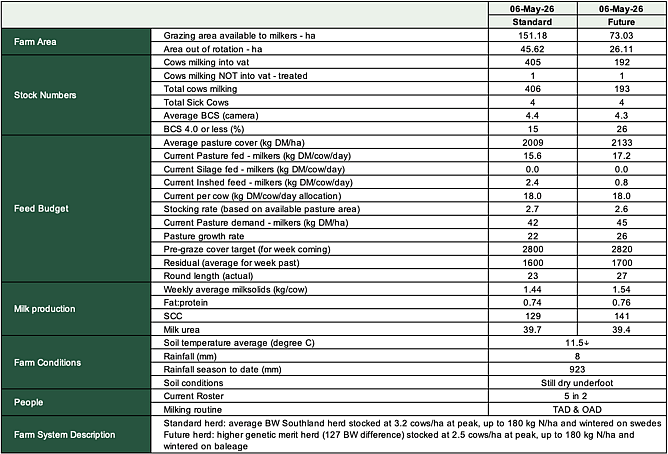
Soil temperatures have dropped again this week to 11.5°C. Conversations with farmers have focused on lower pasture growth this season, with many linking it to cooler conditions. The graph below shows average soil temperatures have generally been lower this year compared to last. Rainfall has been relatively similar, with 922mm season-to-date compared with 878mm at the same time last year. Most of the additional rainfall this season fell during July and August.
Pasture growth has dropped significantly this week, with the Standard herd growing 22kg DM/ha/day and the Future herd 26kg DM/ha/day. The recent aeration of paddocks has impacted short-term growth rates, however we expect to see the benefits next season through improved soil condition and pasture performance.
Rotation length has also sped up this week for the Standard herd, mainly due to springer paddocks being removed from the rotation as preparations begin for next season. We're working hard to extend the rotation using silage and in-shed feed support. It’s a reminder of how quickly pasture position can change from one week to the next at this critical time of year.
More cows have been dried off this week, with herds being redistributed between twice-a-day, once-a-day, and dry cows based on Body Condition Score requirements and milk yields. We expect to have all cows leaving the farm completed next week to help reduce pressure on feed demand.
The in-calf heifers are due home in the coming weeks, and preparations are underway to transition them onto grass and baleage through winter.
Standard herd
Average BW Southland herd stocked at 3.2 cows/ha at peak, up to 180 kg N/ha and wintered on swedes.
Future herd
Higher genetic merit herd (127 BW difference) stocked at 2.5 cows/ha at peak, up to 180 kg N/ha and wintered on baleage.
If you have any questions about this week's HubWatch, please contact our team.