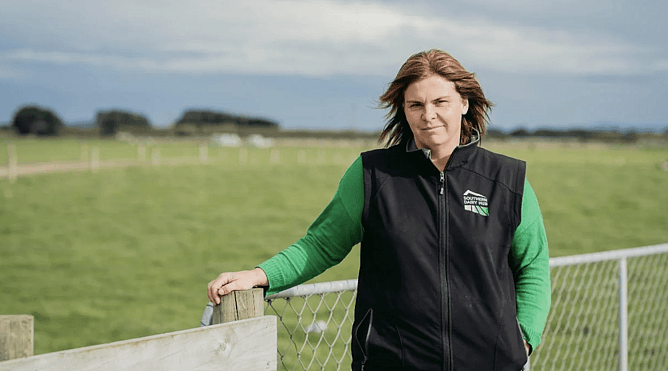
When I joined the Southern Dairy Hub in July 2023, I came in knowing the southern farming community well — a decade at LIC across the Lower South Island had seen to that. But stepping into the General Manager role at SDH was something different.
Here was an organisation with a 349-hectare commercial-scale research farm, a passionate group of stakeholders, and enormous potential to serve farmers in a way few organisations can – genuine research purpose. Three years on, reflecting on what we've built and where we're heading feels both rewarding and energising.
Building a team that performs
The foundation of everything we do is the people on the ground. A high-performing farm team doesn't happen by accident — it takes deliberate recruitment, clear expectations, and a culture where people feel valued and trusted to do their jobs well. Over the past three years, we've worked hard to build exactly that. Research farms are complex environments. Our team isn't just running a commercial dairy operation; they're doing so while managing the precision and discipline that rigorous research demands. That's a unique ask of any farm employee, and finding people who thrive in that environment — who are genuinely curious, adaptable, and committed to doing things right — has been one of my greatest priorities. I'm proud of the team we have. Their professionalism is what makes everything else possible.
Making sustainability work alongside research
One of the realities of a research farm is the tension between commercial sustainability and the requirements of research programmes. Trials impose constraints — sometimes you can't make the most commercially efficient decision because the integrity of a research parameter depends on you holding a different course. Learning to overlay those demands on a farming system that still needs to stack up financially has been one of the more interesting challenges of my time here. We've had to be creative and disciplined in equal measure. The goal is a farming model that is genuinely sustainable — economically, environmentally, and in terms of the people who work within it — and I believe we're getting there. In fact, the Hub looks to produce more milk in the current season than has been achieved at any other point in the Hub's history. Something I’m extremely proud about. We are looking forward to sharing these results at our Winter Field Day in early July.
Pivoting from research to demonstration
One of the most important strategic shifts we've made is leaning further into demonstration for the short term. This was a huge undertaking for the farm team and the scientists at the Hub. Research generates knowledge, but demonstration translates that knowledge into something farmers can directly connect with their own operation. That shift in emphasis has changed how farmers engage with us. Rather than waiting for published findings, we're sharing what's happening on farm in real time — and that's where HubWatch has become such a powerful tool.
HubWatch gives farmers a weekly window into what we're seeing, what decisions we're making, and what the data is showing. It's not a glossy summary after the fact — it's live, honest, and practical. The revamped format has sharpened its usefulness considerably, and the feedback we're getting confirms that farmers are finding it genuinely relevant to their own decision-making. That's exactly what we set out to achieve.
Deepening community connection
Research only has value if it reaches people. Over the past three years, we've invested in our communications — not as a peripheral activity but as a core part of what we do. Our seasonal newsletters have grown in both reach and depth. Our digital campaigns have extended our presence beyond those who can physically visit the Hub. And our Field Days continue to be one of the most direct and meaningful ways we connect with farmers, industry partners, and the wider community. There is something irreplaceable about getting people on farm, walking the paddocks, seeing the trials first-hand, and having honest conversations about what the data means.
I believe the Hub is perfectly positioned to be ahead of the game — so that when farmers need to make decisions, they have the best possible information to draw on. That's what drives us, and it's what will continue to shape everything we do.
Balancing the governance needs alongside the operational ones
One aspect of the GM role that perhaps isn't visible from the outside is the sheer weight of governance responsibilities that run alongside the day-to-day operational demands of a working farm.
Supporting the team, the Board, the Research Advisory Committee, and the Southern Dairy Development Trust — each with their own rhythms, reporting cycles, and legitimate needs — takes an enormous amount of time and energy. It's necessary work; good governance is what gives the Hub its integrity and accountability, and I wouldn't want it any other way. But the reality is that these demands don't pause when calving kicks off, when a trial hits a critical window, when there’s a significant weather event or when the team needs direction on the ground. Learning to hold both worlds simultaneously — the boardroom and the paddock — has been one of the steeper learning curves of this role, and one I have a deep respect for. When multiple farm priorities are competing for attention at the same time as financial reports need preparing for or a Board report needs filing, you find out very quickly what good planning, a strong team, and clear priorities are worth.
Warm regards,
Andrea Dixon, SDH General Manager