Your weekly glimpse into research in action at Southern Dairy Hub.
Insights
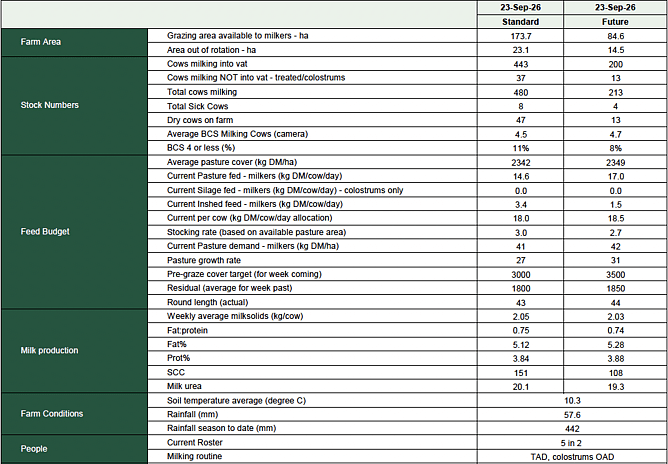
Sodden conditions across the farm have prevented silage feeding this week, so we are increasing in-shed feed to the Standard herd to meet feed demand.
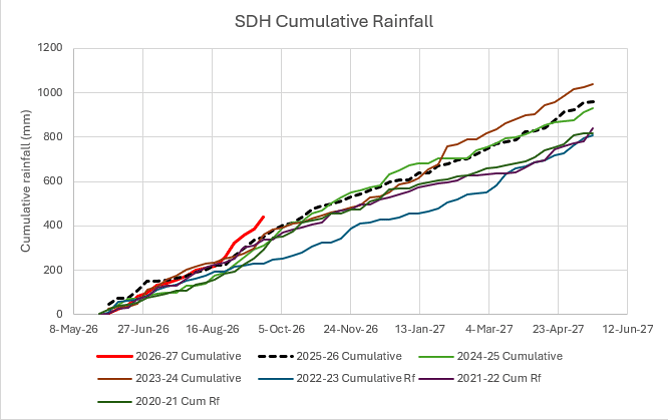
Reflecting on current conditions and spring 2024, the main difference for us has been the drier autumn and early winter this year compared with 2024. This has meant good grazing conditions up until the end of August, so the cows have got off to a good start.
We plan to assess all paddocks for soil and pasture damage using the DairyNZ pasture damage score guide once the weather settles, so we have good information to inform remedial action such as oversowing and aeration.
The Future herd is in the last week of the spring rotation plan, while the Standard herd has two weeks to go.
Camera BCS data has been used to identify lighter cows in each age group. Any R2 or R3 below BCS 4.5, and any mixed-age cow at BCS 4 or below, will be offered an additional 1 kg DM of in-shed feed. For the Standard herd, this will be PKE, and for the Future herd, the barley/DDG blend.
We are currently working through the challenge of rotavirus and crypto in the calves. While the calf pens are dry and regularly topped up with straw and sprayed, we have experienced issues with calves up to two weeks of age.
Our first herd test was completed this week, so it will be interesting to see how the different age groups are performing.
Farm System Description
Standard herd: average BW Southland herd stocked at 3.2 cows/ha at peak, up to 180 kg N/ha and wintered on swedes & kale
Future herd: higher genetic merit herd (127 BW difference) stocked at 2.5 cows/ha at peak, up to 180 kg N/ha and wintered on baleage
If you have any questions about this week's HubWatch, please contact our team.